3D gel or 4D acrylic? How to choose
Plate Guides · 5 February 2025 · 5 min read
Both are raised, both are legal, both look better than flat print. The difference is the edge: a soft dome or a sharp cut. Here's how we'd pick for your car.
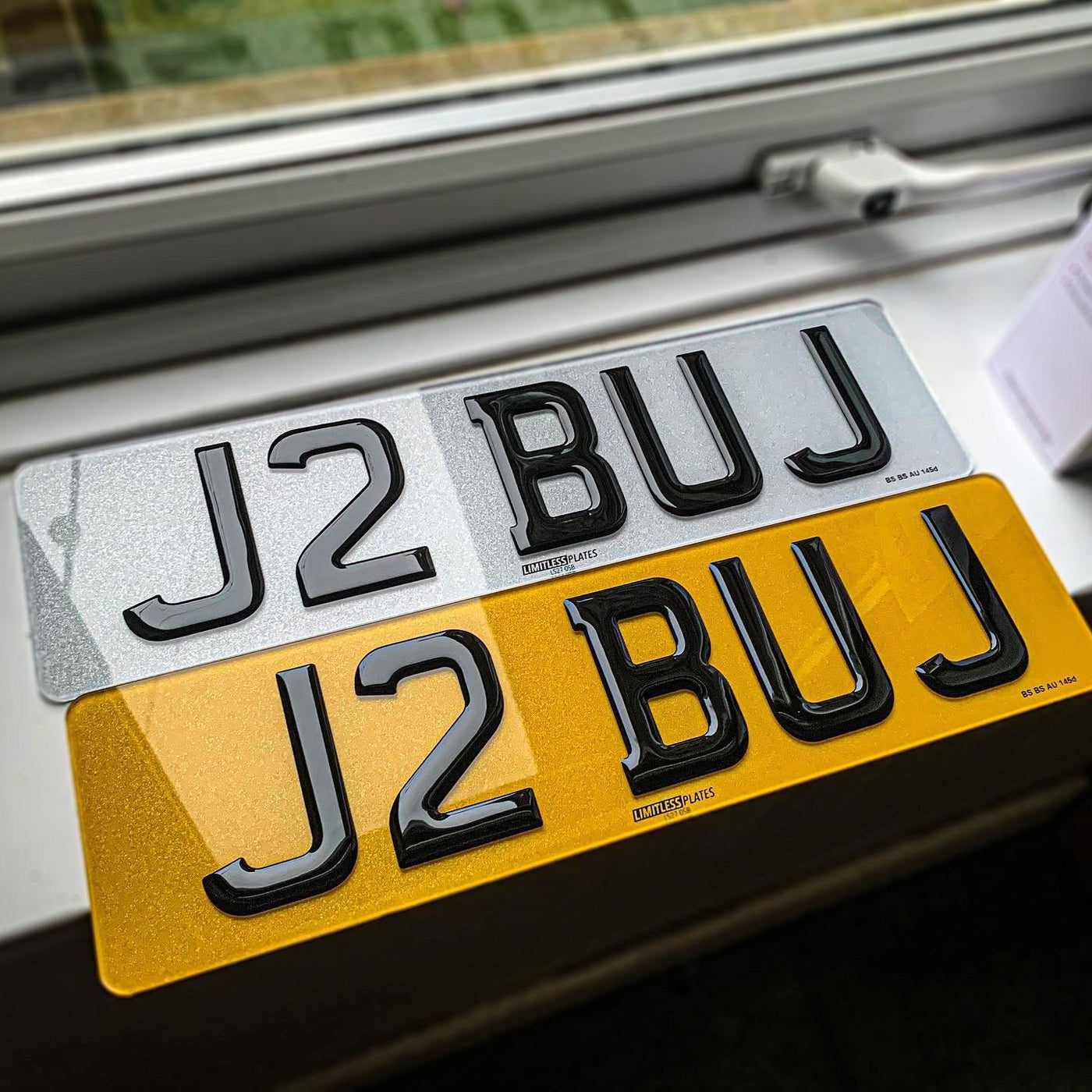
The difference in one sentence
Gel is poured; acrylic is cut. Everything else about how they look and age follows from that.
How each one is made
3D gel. The registration is printed on the plate, then a clear polyurethane resin is dosed over each character and left to cure. Surface tension pulls the resin into a dome, so every letter ends up with a soft, rounded, glossy top that curves down to a thin edge. It's done by hand and it takes a day to cure properly.
4D acrylic. Each character is laser-cut from a sheet of solid black acrylic, 3 mm or 5 mm thick, then bonded to the printed plate one at a time. The edges are square and the top is dead flat. It's cut by machine and placed by hand.
4D gel. Both. Acrylic letters with a gel dome poured on top, so you get the sharp shadow line at the base and the gloss on top. It's the most work, which is why it costs the most.
What you see on the car
Stand a few metres back and the difference is the edge. A 4D letter throws a hard shadow onto the plate, so the characters look like they've been placed on it. A gel letter catches the light in a curve, so it looks like it's been poured on. In bright sun gel throws a highlight; in flat light 4D reads crisper.
Up close, 4D wins on precision. Every corner is exactly the shape of the font. Gel corners are softened by the resin, which some people like and some don't.
How they age
Modern gel resin is UV-stabilised and we haven't had yellowing complaints since we switched to it, but old gel plates from the early 2000s did go yellow, and that reputation still follows gel around. The dome is slightly flexible, so it shrugs off small knocks.
Acrylic is colourfast. A 4D plate that's been on a car for years is still jet black. It is rigid, so a proper impact can chip an edge, and a jet wash held on one letter at point-blank range can lift it. Neither happens in normal use.
Both are fine with car washes, both are fine in winter, both are fully road legal.
Cost
| Pair | What you're paying for | |
|---|---|---|
| 3D gel | £39.99 | Resin and hand-finishing |
| 4D acrylic, 3 mm | £34.99 | Laser-cut letters, placed by hand |
| 4D acrylic, 5 mm | £44.99 | Thicker acrylic, deeper shadow |
| 4D gel, 3 mm | £59.99 | Acrylic plus resin, the most labour |
| 4D gel, 5 mm | £69.99 | As above with the thicker letter |
For reference a standard printed pair is £24.99, so any of these is a £10 to £45 step up.
Which one for which car
Dark, modern cars. 4D. The shadow line under each letter is the whole effect, and it shows best against black, grey and dark blue. Go 5 mm if the car is big.
Classic and retro cars. Gel. The rounded letter suits older shapes, and 4D can look too sharp on a 90s car.
White and silver cars. Either works; the gel highlight shows up well against a light body.
Show cars. 4D gel, and probably a show plate if you want tints or spacing the road-legal rules don't allow.
Vans and daily workhorses. Honestly, a printed plate. See are 4D plates worth it for the case against.
Fitting
Both need sticky pads rather than screws, unless you can place a screw in a gap between characters. Never through a letter. The fitting guide covers it.
If you're still torn, the builder shows your own registration in each finish, and the camera moves in close when you switch, so you can see the edge for yourself.