Printed, gel or acrylic: the honest comparison
Plate Guides · 15 January 2025 · 5 min read
Three ways to make the same legal plate. What each one costs, how it's made, how it ages, and who should buy which.
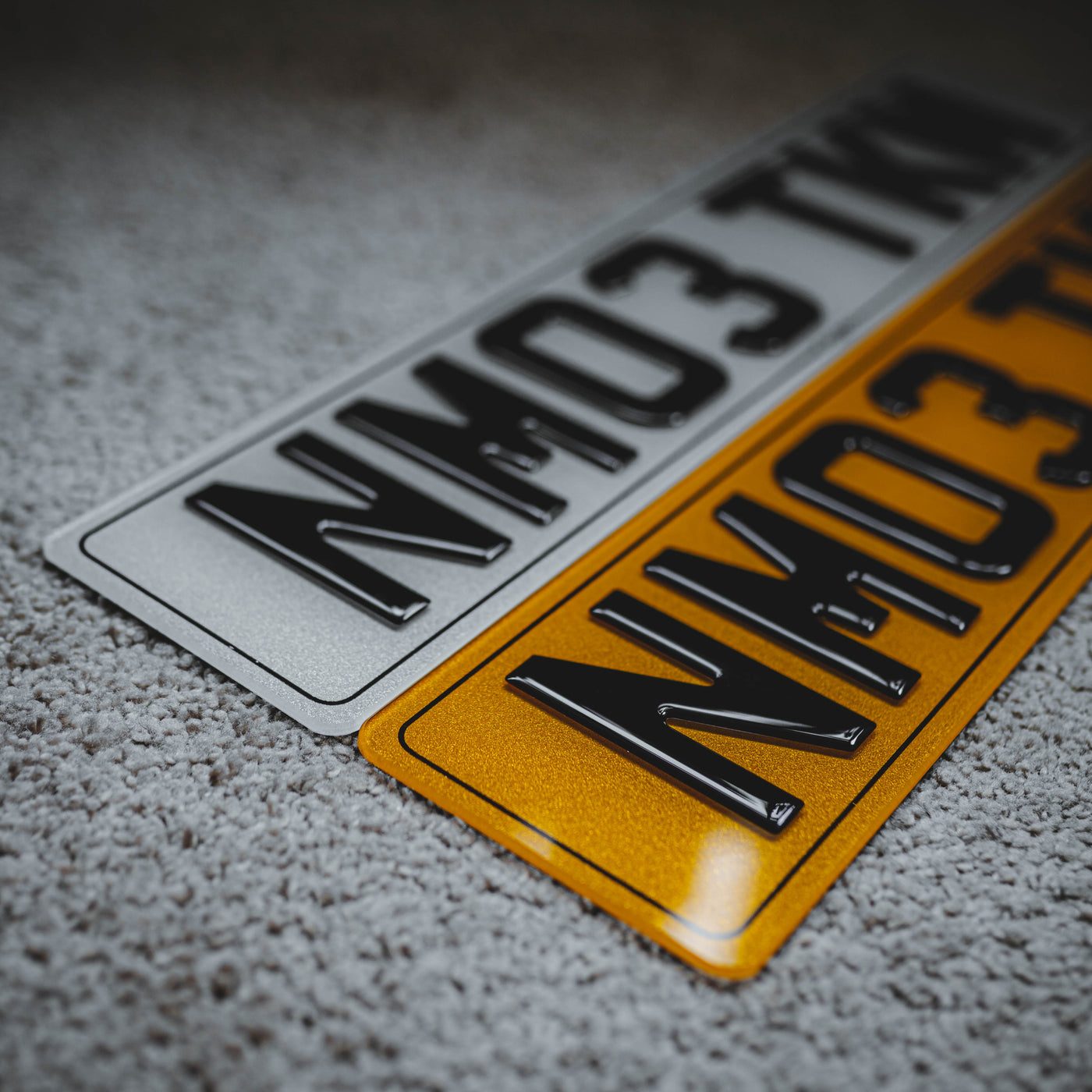
Same plate, three finishes
Every plate we make starts the same way: a reflective blank, the registration printed in Charles Wright to the legal size and spacing, our name and postcode and the BS AU 145e mark along the bottom. A printed plate stops there. Gel and 4D add a layer on top of the print. That's the whole difference, and it's why all three are equally road legal.
Printed
The characters are printed onto the reflective face and sealed. Flat, matt black, exactly what came on the car from the factory.
It's the cheapest, it's the quickest to make, and there's nothing on it to chip or lift. The downside is that print does fade. A plate that's had five years of sun goes from black to a dark grey, which is the point most people replace them.
Buy it if the car is a workhorse, you're selling soon, or you just want a clean, correct plate without spending more.
3D gel
Clear resin is poured over each printed character and cures into a domed, glossy letter. Soft rounded edges, catches the light in a curve.
Gel is hand-finished, slightly flexible, and modern resin doesn't yellow. It suits older and softer-shaped cars, and it's the finish most people mean when they say "raised plates" because it's been around the longest.
Buy it if you like a rounded letter, the car is a classic, or you want the raised look on a light-coloured car where the gloss highlight shows well.
4D acrylic
Each character is laser-cut from solid black acrylic, 3 mm or 5 mm thick, and bonded to the plate. Square edges, flat top, and a hard shadow line at the base of every letter.
Acrylic doesn't fade, and the shadow is the effect people are paying for. It's the sharpest of the three and the one that photographs best on a dark car. Rigid, so a hard knock can chip an edge, but in ordinary use it lasts longer than the print underneath it.
Buy it if the car is dark, modern, or you want the crispest possible look. Go 5 mm on a big car, 3 mm on a small one.
4D gel, for completeness
Acrylic letters with a gel dome on top. Sharp base, glossy top, the most labour and the highest price. It's the show-car finish, and it's what we'd put on our own cars if money were no object.
Side by side
| Printed | 3D gel | 4D acrylic | 4D gel | |
|---|---|---|---|---|
| Pair | £24.99 | £39.99 | £34.99 / £44.99 | £59.99 / £69.99 |
| Made by | Print + poured resin | Print + cut acrylic | All three | |
| Edge | Flat | Soft dome | Sharp, square | Sharp with gloss |
| Fades? | Eventually | No | No | No |
| Fitting | Pads or screws | Pads | Pads | Pads |
| Road legal | Yes | Yes | Yes | Yes |
The two 4D prices are 3 mm and 5 mm letters.
The decision in thirty seconds
Dark car and you want it to look finished: 4D. Older car or you prefer round letters: gel. Van, lease return, or you're not fussed: printed. Can't decide between gel and 4D: this one goes deeper.
Or put your own registration into the builder, switch between the finishes and watch the camera move in on the letters. That settles it for most people faster than reading about it.