Are 4D plates legal? Yes, if they're made properly
Plate Legality · 10 February 2025 · 4 min read
Raised acrylic letters are allowed under BS AU 145e. What decides it is the font, the spacing, the reflective backing and the supplier mark. Here's the checklist we work to.
The short answer
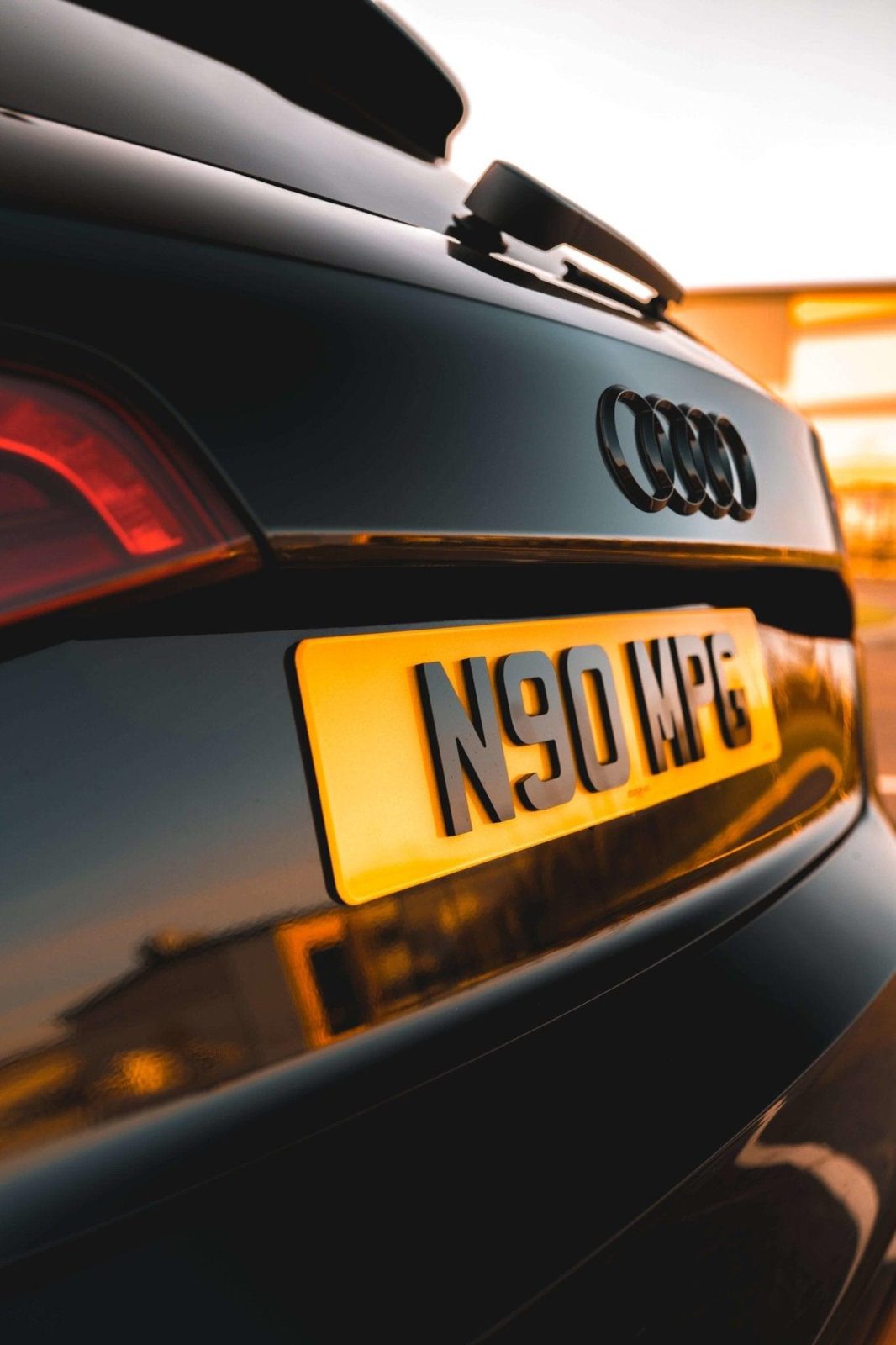
Yes. A 4D plate is road legal in England, Scotland and Wales as long as it's made to the current British Standard, BS AU 145e. The standard doesn't care whether the characters are printed, gel or cut from acrylic. It cares about what the plate looks like to a person and to a camera.
We make 4D plates every day for cars that then go through MOTs, ANPR gantries and the occasional roadside stop. None of that is a problem when the plate is made right. The trouble comes from plates that look like 4D but skip a rule to look "cleaner".
What BS AU 145e actually asks for
These are the things a tester or an officer is checking against. Every 4D plate we make meets all of them.
- The typeface. Charles Wright 2001, no variations. No italic, no rounded, no "custom 4D font".
- Character size. 79 mm tall, 50 mm wide (the 1 and the I are 14 mm), with a 14 mm stroke.
- Spacing. 11 mm between characters, 33 mm between the two groups, 11 mm margin to the edge of the plate. This is the rule most often broken on purpose to spell a name.
- Solid black characters. No shading, no two-tone, no carbon or chrome effect, no coloured layer under the acrylic.
- Reflective backing. White on the front, yellow on the rear, made from approved retroreflective material. No tint over it.
- The marks. The BS AU 145e mark, plus the name and postcode of the supplier who made it. Ours is laser-etched along the bottom edge of every plate.
- No patterns. A plain background. A flag and national identifier on the left is allowed; anything else isn't.
Where 4D plates go wrong
The acrylic itself has never been the issue. These are the reasons we've seen 4D plates fail.
Tinted or smoked overlays. A tint reduces the contrast between the letters and the background, which is exactly what the reflectivity rule is protecting. It's an MOT fail and a fixed penalty. If you want a tinted plate you want a show plate, and it stays off the road.
Coloured or "carbon" layers. Some sellers put a thin coloured sheet under a clear acrylic letter. That's a two-tone character, which the standard prohibits.
Squeezed spacing. Closing the 33 mm gap so a registration reads as a word is the classic. Our builder won't let you do it on a road-legal plate; it spaces to the standard automatically.
Missing supplier mark. A plate without a name and postcode on it wasn't made by a registered supplier, and that's a problem in itself.
Cameras, MOTs and the police
ANPR reads contrast, not depth. A solid black acrylic letter on a reflective white or yellow background is the highest-contrast plate there is, which is why we've never had a 4D plate come back as unreadable. Raised letters are fine at the MOT for the same reason. What fails is tint, wrong font and wrong spacing, none of which have anything to do with the letters being raised.
The penalty for a non-compliant plate is a fixed £100 on the spot, up to £1,000 in court, and the car can fail its MOT. Not worth it for a slightly closer letter gap.
How to be sure
Order from a supplier registered with the DVLA, check the plate has the BS mark and a supplier name and postcode, and don't ask for a tint. We'll need to see your documents before we make a road-legal set, which is the other half of the same law. Then build the plates and check the spacing in the preview yourself.