How to Clean Number Plates Without Damaging Them (2026 Guide)
Plate Guides · 15 February 2026 · 4 min read
Dirty number plates can land you a fine. Learn how to safely clean standard, 3D gel, and 4D plates without causing damage.
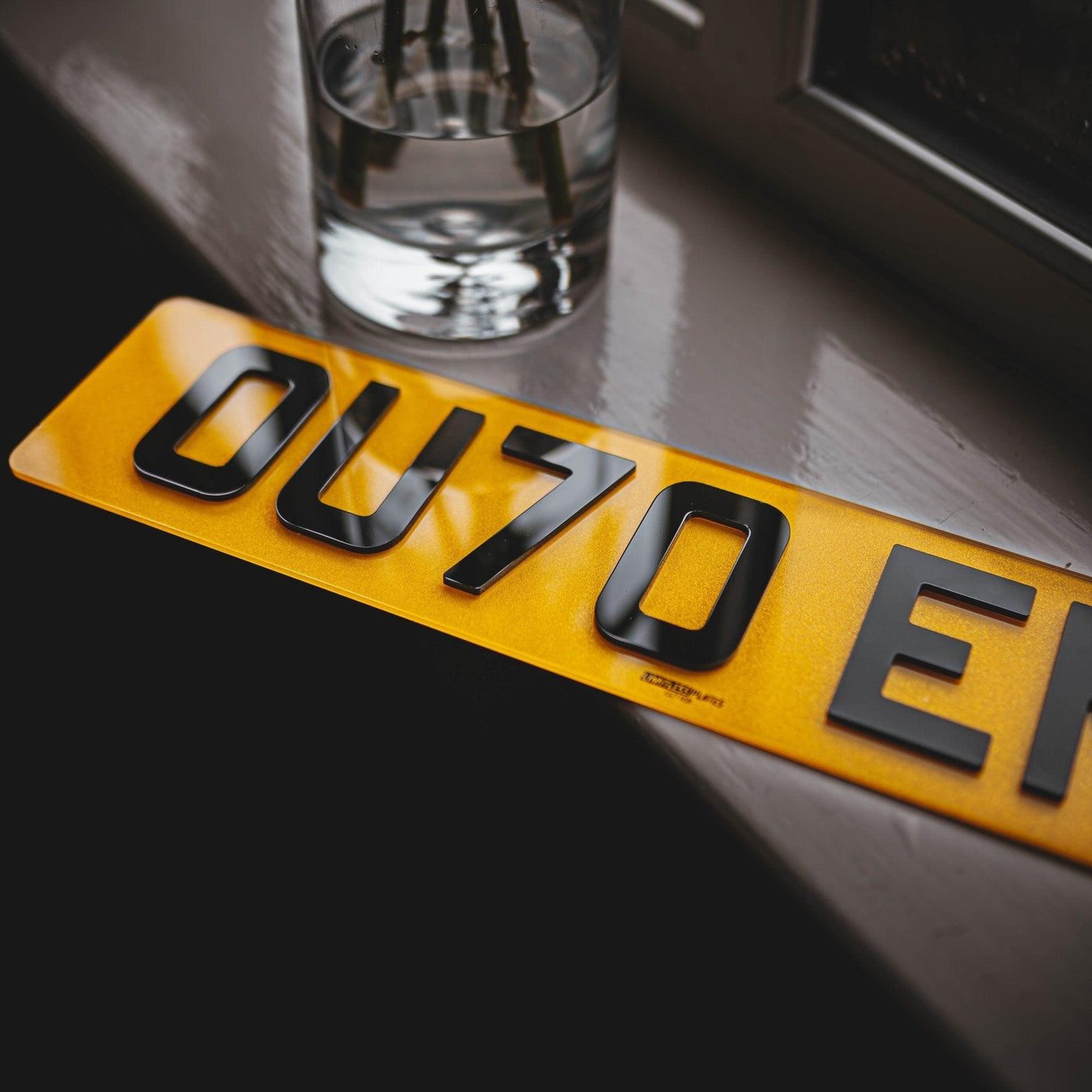
How to Clean Your Number Plates
Keeping your number plates clean isn't just about aesthetics — it's a legal requirement. Under regulation 34 of the Road Vehicles (Construction and Use) Regulations 1986, every plate must be legible at all times. An unreadable plate can result in a £1,000 fine.
Cleaning Standard (Printed) Plates
Standard plates are the easiest to maintain:
- Rinse with clean water to remove loose dirt and grit
- Apply a mild car shampoo or all-purpose cleaner with a soft sponge or microfibre cloth
- Wipe gently — avoid abrasive pads or brushes that could scratch the printed surface
- Rinse and dry with a clean microfibre cloth
Avoid using solvent-based cleaners or tar removers directly on the printed characters, as these can strip the UV-cured ink over time.
Cleaning 3D Gel Number Plates
3D gel plates require a bit more care due to the raised gel resin characters:
- Do: Use warm soapy water and a soft cloth
- Do: Gently clean around and over the raised characters
- Don't: Use a jet wash at close range (less than 30cm) — the high pressure can lift gel characters over time
- Don't: Use abrasive compounds, polish, or wax directly on the gel — it can dull the finish
- Don't: Scrub aggressively — gel characters are bonded but not indestructible
For stubborn dirt like tar or tree sap, soak the area with warm water first, then gently wipe. A dedicated bug and tar remover applied with a microfibre cloth works well.
Cleaning 4D Number Plates
4D plates with laser-cut acrylic characters are the most durable:
- Acrylic is resistant to most cleaning products, UV light, and weather
- You can use standard car shampoo, APC, or even a pressure washer at a reasonable distance
- Avoid scraping between characters with hard tools — this can scratch the reflective background
- A soft detailing brush is ideal for getting into the gaps between raised characters
How Often Should You Clean Your Plates?
As a general rule, clean your plates every time you wash your car. In winter, when roads are gritted and salted, you may need to clean them more frequently. Salt build-up can obscure characters and trigger a police stop or fine.
Signs Your Plates Need Replacing
If cleaning doesn't restore legibility, it might be time for new plates:
- Yellowing on the rear plate background
- Faded or peeling printed characters on standard plates
- Cracked or chipped acrylic on 4D plates
- Lifted gel characters on 3D plates
Read our full guide: How Long Do Number Plates Last?
Keep Your Plates Looking Fresh
Regular cleaning extends the life of your plates regardless of type. And if it's time for a replacement, design your new plates with our 3D configurator — we offer standard, 3D gel, 4D, and 4D gel, all dispatched same-day.