Are gel number plates legal?
Plate Legality · 4 September 2026 · 4 min read
3D gel plates have been road legal for over twenty years and still are under BS AU 145e. What makes one illegal is the same as for any plate, and it's never the gel.
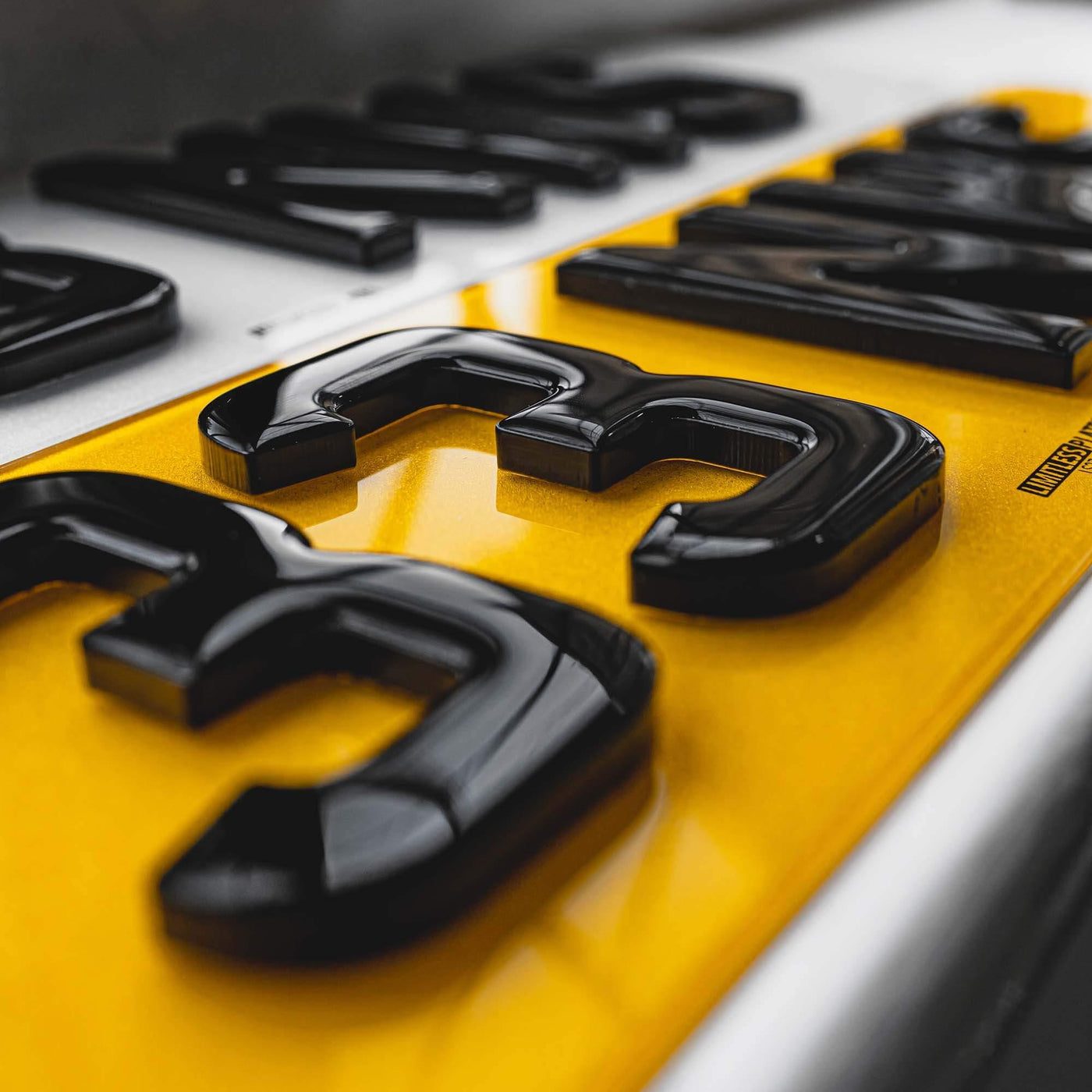
Yes, and they have been for decades
Gel plates were the original raised plate. Resin domed over printed characters has been on UK roads since the early 2000s, and the British Standard has always allowed it because the standard is about what the plate shows, not how the surface is built.
Under BS AU 145e a gel plate is legal if the characters are the right font, size and spacing, solid black, on a reflective background, with the maker's details and the BS mark on the plate. A gel dome changes none of those things. The only thing it adds is height.
Where gel plates go wrong
Shading or "two-tone" resin. Some sellers tint the resin or put a carbon-look layer under it. That makes the character not solid black, which is prohibited. The dome itself should be clear, over a black printed letter.
Tints over the whole plate. A smoked overlay is illegal on any plate. Gel or not, it's a show plate at that point.
Squeezed spacing. Gel is often sold alongside "custom" spacing to spell names. Closing the 33 mm group gap or the 11 mm character gaps is an offence. Our builder won't do it on a road-legal plate.
Lifted characters. Old resin, or a jet wash at point-blank range, can lift the edge of a gel character. A plate with a lifted or missing character no longer displays the registration correctly and will fail an MOT. Modern resin is far tougher than the gel of fifteen years ago, but treat the plate with the same respect you'd give paintwork.
Gel and cameras
ANPR reads contrast. A black character on a reflective background is the highest contrast there is, and the dome doesn't affect it. We've never had a gel plate returned for being unreadable by a camera. The ANPR guide covers the detail.
Telling a compliant gel plate
Turn the plate over and look at the bottom edge: you want the BS AU 145e mark and the supplier's name and postcode. Look at the letters straight on: solid black, no colour showing through the resin. Look at the gaps: a clear break between the two groups. If those three are right, it's a legal plate.
Ours are made with UV-stable resin over a print done to the standard, and every one leaves the workshop with our name and postcode on it. If you're weighing gel against acrylic, 3D gel or 4D acrylic is the honest comparison, and the builder will show your registration in both.